The essentials in 30 seconds
If you only read one thing, read this.
🚇Getting around
On foot around the centre
The historic centre is compact and mostly pedestrian: from the Cathedral to the Setas, Santa Cruz or the river is a 10-20 min walk. It's the best way to discover Seville. Comfortable shoes and, in summer, shade and water.
SVQ airport → city centre
The TUSSAM EA bus links the airport with the centre (Santa Justa, Nervión, Paseo de Colón, Plaza de Armas) for €6 single / €8 return (return on the same day); towards Seville it runs from 4:30 to 00:05. Fixed taxi fare: €26 (Mon-Fri 7am-9pm) / €29 (nights, weekends and holidays).
Metro and tram
The Metro has a single line (L1, Ciudad Expo–Olivar de Quintos), useful from the outskirts; ticket from €1.35. The MetroCentro tram runs through the centre (Plaza Nueva–San Bernardo) past Avenida de la Constitución, the Cathedral and Puerta de Jerez.
TUSSAM buses
Complete TUSSAM city bus network. The circular lines C3 and C4 ring the centre and are very handy for linking neighbourhoods without walking in the sun. Current fares and passes on the TUSSAM website.
Sevici (public bikes)
Seville is flat and very cycle-friendly, with an extensive bike-lane network. Sevici is the city's public bike scheme; check its website for visitor options and fares. Ideal for the Guadalquivir riverside, the Parque de María Luisa and Triana.
Train — AVE and Santa Justa
Santa Justa station connects to Madrid-Atocha by AVE in approx. 2 h 30 (also AVLO) and to Córdoba in approx. 45 min: a perfect day trip. Also trains to Cádiz (approx. 1 h 40), Jerez (approx. 1 h) and Málaga. Buy in advance for the best fares.
Everyday basics
For everyday life in the city.
Useful for your stay
What opens on Sundays, public holidays, street markets and local rules.
Opening hours checked in November 2026; they may change.
💡Local tips
- The heat rules in summer. From June to September plan the day like a Sevillian: monuments and walking first thing (9am-12pm), lunch and siesta or a museum at midday, and life at sunset. Always carry water and use the shaded narrow streets of Santa Cruz and Triana.
- Take advantage of free admissions. The Archivo de Indias and the Torre del Oro are free (at the Torre, with a voluntary donation); the Palacio de las Dueñas on non-holiday Mondays from 4pm with online booking; the Cathedral on Sundays (subject to the liturgical calendar) with tickets from the Puerta del Príncipe ticket office from 5pm; and the Museo de Bellas Artes is free for EU citizens. Children under 13 with an adult go free at the Real Alcázar and the Cathedral.
- Book the big ones online. The Real Alcázar and the Cathedral build huge queues: buy your ticket days or weeks ahead on their official websites. For the Alcázar, a timed booking is practically essential in season.
- Authentic vs touristy flamenco. For intimate quality: Casa de la Memoria, La Casa del Flamenco (Santa Cruz) or the Flamenco Dance Museum. Classics with pedigree: Los Gallos and Tablao El Arenal. The most authentic and cheapest: the flamenco peñas of Triana.
- Holy Week and the Feria transform the city. They are spectacular but the city fills up, prices soar and many streets close for the processions. Book accommodation months ahead, check the route of the floats and arm yourself with patience (and comfortable shoes).
- Pickpockets in crowds. The centre is very safe, but at the Cathedral, the Plaza de España, the Setas, on public transport and especially during Holy Week and the Feria, keep your bag and phone in front and under control.
- Seville is the best base for western Andalusia. Córdoba is approx. 45 min away by AVE, Itálica is on the outskirts (metropolitan bus), Jerez and Cádiz approx. 1 h and 1 h 40 by train, and the white villages and Doñana are close by. Use the rail links for day trips without a car.
🛡️Stay safe
Seville is a safe and welcoming city; the historic centre can be walked without problems day and night. The most common crime is pickpocketing in very crowded areas (Cathedral, Plaza de España, Setas, public transport) and especially during Holy Week and the Feria. Carry valuables in a front bag and a copy of your passport.
Beware of the heat: in summer heatstroke is a real risk. Hydrate constantly, use a cap and high-factor sunscreen, and avoid direct sun between 2 and 6 pm. The nightlife areas (Alameda de Hércules) are lively and safe; apply the usual big-city common sense.
Emergency phone numbers:
- 112 · General emergencies (EU)
- 092 · Seville Local Police
- 091 · National Police
- 062 · Guardia Civil
- 061 · Medical emergencies
- 080 · Fire brigade
Hospital Universitario Virgen del Rocío (Avenida Manuel Siurot s/n, switchboard 955 012 000) — the largest healthcare complex in Andalusia, 24/7 A&E. Also the Hospital Universitario Virgen Macarena (Avenida Doctor Fedriani 3). Duty pharmacies: the Seville Official College of Pharmacists publishes each day's rota. EU citizens: bring your European Health Insurance Card (EHIC) for free care.
🌟The must-sees
Seville is the essence of Andalusia: the largest Gothic cathedral in the world, the oldest royal palace still in use in Europe, the monumental tilework of the Plaza de España, the alleys of the old Jewish quarter and the cradle of flamenco across the Guadalquivir. A luminous, monumental and deeply alive capital. These are the ten must-sees.
Seville Cathedral + Giralda
The largest Gothic cathedral in the world and a World Heritage Site. It holds the tomb of Christopher Columbus and the largest altarpiece in Christendom. The Giralda (a former Almohad minaret) is climbed via ramps, with spectacular views. Entry €13 online (€14 at the ticket office; free for children up to 13 accompanied by an adult). Mon-Sat 10:45-18:00, Sun 14:30-19:00. Book online to skip the queues.
Real Alcázar
The oldest royal palace still in use in Europe, a jewel of Mudéjar art, a World Heritage Site and a Game of Thrones location (Dorne). Patio de las Doncellas, Ambassadors' Hall, the baths of Doña María de Padilla and gardens with peacocks. General admission €15.50 (includes the Antiquarium and the Centro Cerámica Triana; free for children under 13 with an adult). Daily 9:30-19:00 from April to September and 9:30-17:00 from October to March. Online booking essential.
Plaza de España + Parque de María Luisa
Seville's most photographed ensemble, designed by Aníbal González for the 1929 Ibero-American Exposition. 48 tiled benches for every province of Spain, a canal with rowing boats and a park of gardens, fountains and doves. Free access. Best at sunset, with golden light on the ceramics.
Barrio de Santa Cruz
The old Jewish quarter, a maze of whitewashed alleys, orange-tree courtyards and charming squares: Plaza de Doña Elvira, Callejón del Agua, Patio de Banderas. Here is the Hospital de los Venerables (Focus Foundation, with Velázquez and Murillo). Stroll early or at night; bag at the front (pickpockets).
Triana + Puente de Isabel II
The neighbourhood that is the cradle of Gypsy flamenco and of ceramics, across the Guadalquivir via the historic Triana Bridge. Capilla de la Esperanza, Triana Market, the Triana Ceramics Centre and Calle Betis with the best views of the city at sunset. Authentic tapas and flamenco peñas.
Setas de Sevilla (Metropol Parasol)
The largest wooden structure in the world, on Plaza de la Encarnación. Its panoramic walkway offers a 360º view of the old town, spectacular at sunset. General admission from €16 (includes the viewpoint, the film «Feeling Sevilla» and the «Aurora» light show). Below ground, the Antiquarium with Roman remains.
Archivo de Indias + Plaza del Triunfo
The archive of the colonisation of the Americas, a World Heritage Site, in a sober building by Juan de Herrera (the former Casa Lonja). Columbus documents and historic maps. Free entry. Tue-Sat 9:30-17:00, Sundays and public holidays 10:00-14:00, closed on Mondays. Plaza del Triunfo brings together the Cathedral, the Alcázar and the Archive: the monumental triangle.
Torre del Oro + Guadalquivir river
13th-century Almohad tower on the banks of the Guadalquivir, with a small Naval Museum and a viewpoint over the river. Free entry (with a voluntary €3 donation towards its upkeep). The riverside walk links to the Maestranza bullring, Triana and the river cruises. An icon of the Seville skyline.
Palacio de las Dueñas
15th-16th-century palace of the House of Alba, where the poet Antonio Machado was born. Courtyards, gardens with bougainvillea and lemon trees and a notable art collection. General admission €15 with audio guide (free on non-holiday Mondays from 16:00, with online booking). Open 10:00-19:00 from April to September and 10:00-18:00 from October to March. One of the loveliest palace-houses in the city.
Casa de Pilatos
The Renaissance-Mudéjar palace of the Medinaceli Foundation, the model of the Andalusian palace: tilework, coffered ceilings, Roman sculptures and gardens. Main floor €12 and upper floor €6 (children up to 11 free with an adult; guide or audio guide included). Open daily 9:00-18:00. Often quieter than the big monuments.
🍽️Where to eat
Seville is the world capital of the tapa: century-old tiled bars, fried-fish shops, salmorejo, spinach with chickpeas and pringá montaditos. The best tapas areas are Santa Cruz, Triana, the Alameda de Hércules, El Arenal and the Feria quarter. From Spain's oldest bars to Michelin-starred fine dining.
El Rinconcillo (since 1670)
The oldest bar in Seville and in Spain, on Calle Gerona. Mahogany bar where they still chalk up the bill. Must-haves: spinach with chickpeas, salt-cod croquettes, Iberian cured meats. Historic atmosphere, always packed. An essential stop on any tapas crawl.
Bodega Santa Cruz «Las Columnas»
Legendary bar next to the Giralda, noisy, cheap and always heaving. You tapear standing in the street. Famous for the pringá montadito, the spinach and the adobo. The soul of popular tapas right in Santa Cruz. They mark down what you order on the marble bar.
Bar Las Golondrinas (Triana)
Tiny and endearing, in the heart of Triana, full of locals and tiles. Specialities: sirloin tips and garlic mushrooms. Lightning service and honest prices. The essence of Triana tapas; we recommend the original branch on Calle Antillano Campos.
Eslava (San Lorenzo)
A reference for creative tapas in Seville, in the San Lorenzo quarter. "Cigarro para Bécquer", egg on boletus sponge, ribs with honey. Arrive early: no reservations at the bar and it fills up fast. Signature cooking in tapas format.
Abantal (Michelin star)
One of the two Michelin-starred restaurants in Seville, led by chef Julio Fernández Quintero. Creative fine dining built on local, seasonal produce, with two tasting menus (9 and 12 courses). Book ahead. For a special dinner; the city's other star is Cañabota (outstanding fish and seafood).
Typical dishes: fried fish (marinated dogfish, anchovies, baby squid), salmorejo and gazpacho, spinach with chickpeas, oxtail, Iberian ham, pringá montaditos, eggs flamenco-style, snails (in season, spring-summer), pork cheek and shrimp fritters. For a food market: the Triana Market. Well-chilled fino and manzanilla sherry, and «rebujito» at the Feria.
🏖️Nearby day trips (1-2 h)
🏛️ Itálica (Santiponce, 30 min)
Roman city, birthplace of the emperors Trajan and Hadrian, with one of the largest amphitheatres in the Empire and mosaics in situ. A Game of Thrones location (the Dragonpit). Free for EU citizens (others €1.50); closed on Mondays except the day before a public holiday. Metropolitan buses M-170A and M-170B from Seville. A perfect half-day.
🕌 Córdoba (45 min by AVE)
The Mosque-Cathedral, the Jewish Quarter, the Alcázar de los Reyes Cristianos and the Roman Bridge, about 45 min away by high-speed train. In May, the World Heritage courtyards. The easiest and most spectacular day trip from Seville.
🍷 Jerez de la Frontera (60 min)
Home of sherry and of the horse: century-old bodegas and the show at the Royal Andalusian School of Equestrian Art. Also pure flamenco and a lovely old town. Direct train in approx. 1 h.
⚓ Cádiz (1 h 40 by train)
The oldest inhabited city in Western Europe: a seafaring old town, a golden cathedral, urban beaches (La Caleta) and the best fried fish. A comfortable mid-distance train. A full day of sea and Atlantic light.
🏰 Carmona (40 min)
A monumental town above the countryside: Roman necropolis, Seville Gate, Alcázar (now a parador) and endless views. Quiet and a stone's throw away; ideal half-day by car or bus.
🦩 Doñana National Park
One of Europe's most important wetlands, a World Heritage Site: birds, marshes and dunes. Guided 4x4 tours from El Rocío / El Acebuche. Pure nature just over 1 h away.
🌉 Ronda (2 h)
The Tajo gorge and the Puente Nuevo, one of Spain's oldest bullrings and a spectacular old town over the abyss. Can be combined with the white villages route (Arcos, Grazalema, Zahara, Setenil).
🕳️ Aracena + Gruta de las Maravillas (90 min)
In the Huelva mountains: the Gruta de las Maravillas, one of Spain's most beautiful caves, and the home of Jabugo Iberian ham. Mountain villages, dehesa and gastronomy. A full-day plan by car.
🎟️Experiences
🎟️ Recommended experiences
As specialists in vacation-rental management, we know what our guests value. We've curated these experiences with Civitatis, a trusted platform with over 11 million travellers and free cancellation up to 24 h before.
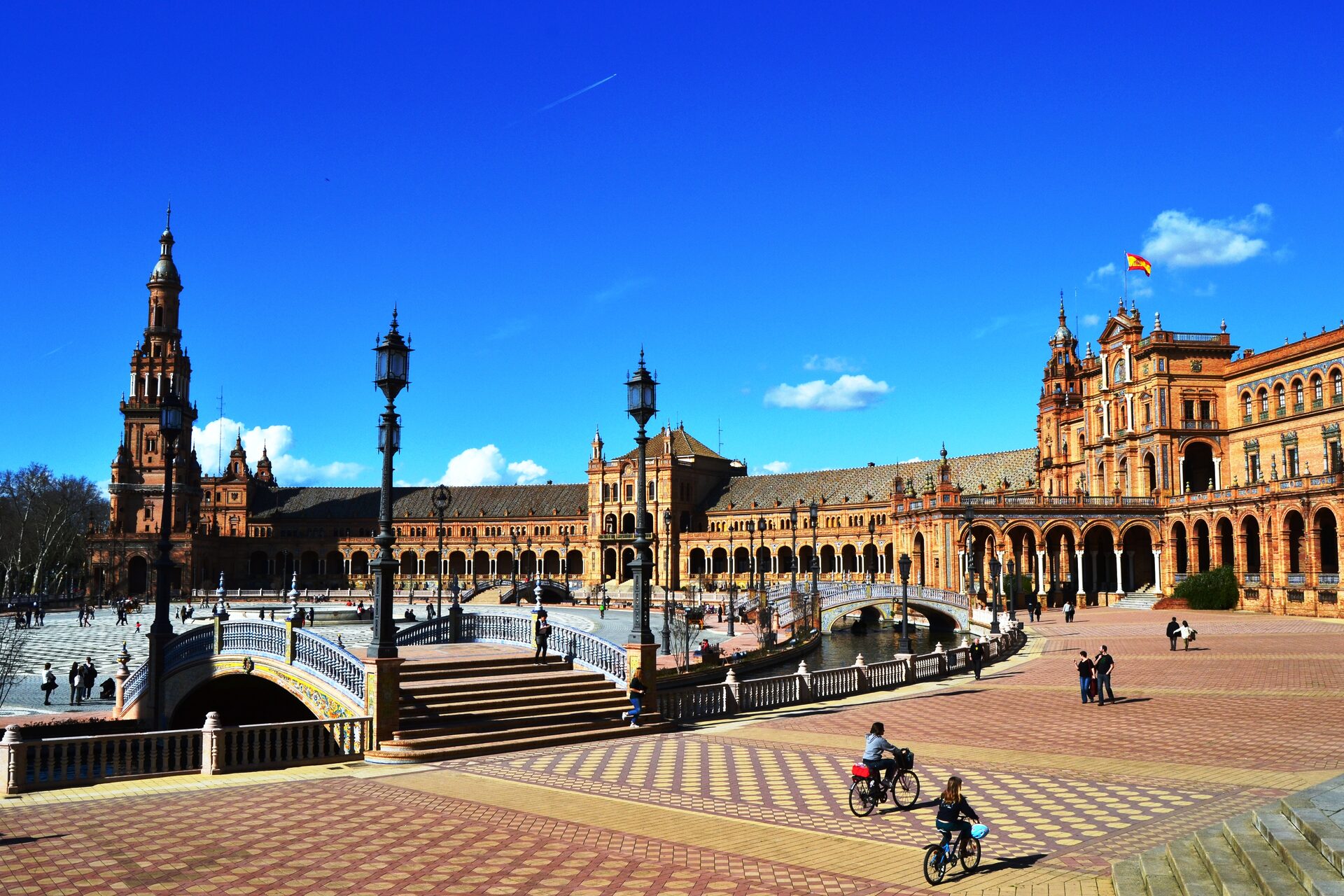 Photo: Ludovic Delot · CC BY-SA 4.0 · Wikimedia Commons
Free tour of Seville
Guided walking tour of Seville's must-sees: the Cathedral, the Giralda, orange-blossom-scented streets and the Plaza de España. Starts at Plaza del Salvador and ends at Plaza de España. Pay what you wish at the end. Duration: 1 h 45 to 2 h.
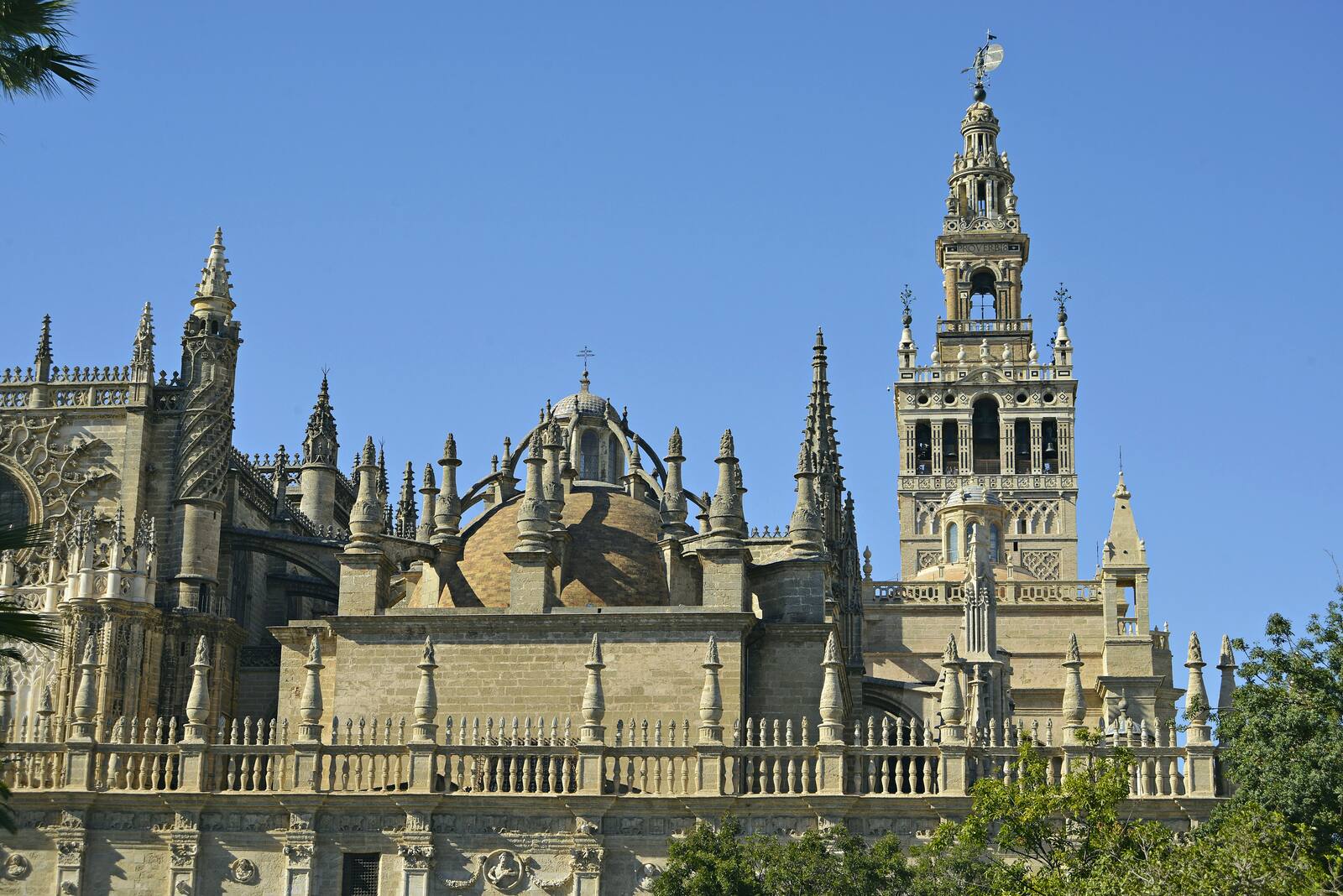 Photo: Alberto-g-rovi · CC BY 4.0 · Wikimedia Commons
Guided tour of the Cathedral and the Giralda
Guided tour inside what was the largest cathedral in the world until the Vatican was built, full of curiosities about one of Seville's most iconic monuments. Duration: 1 h 30 to 2 h.
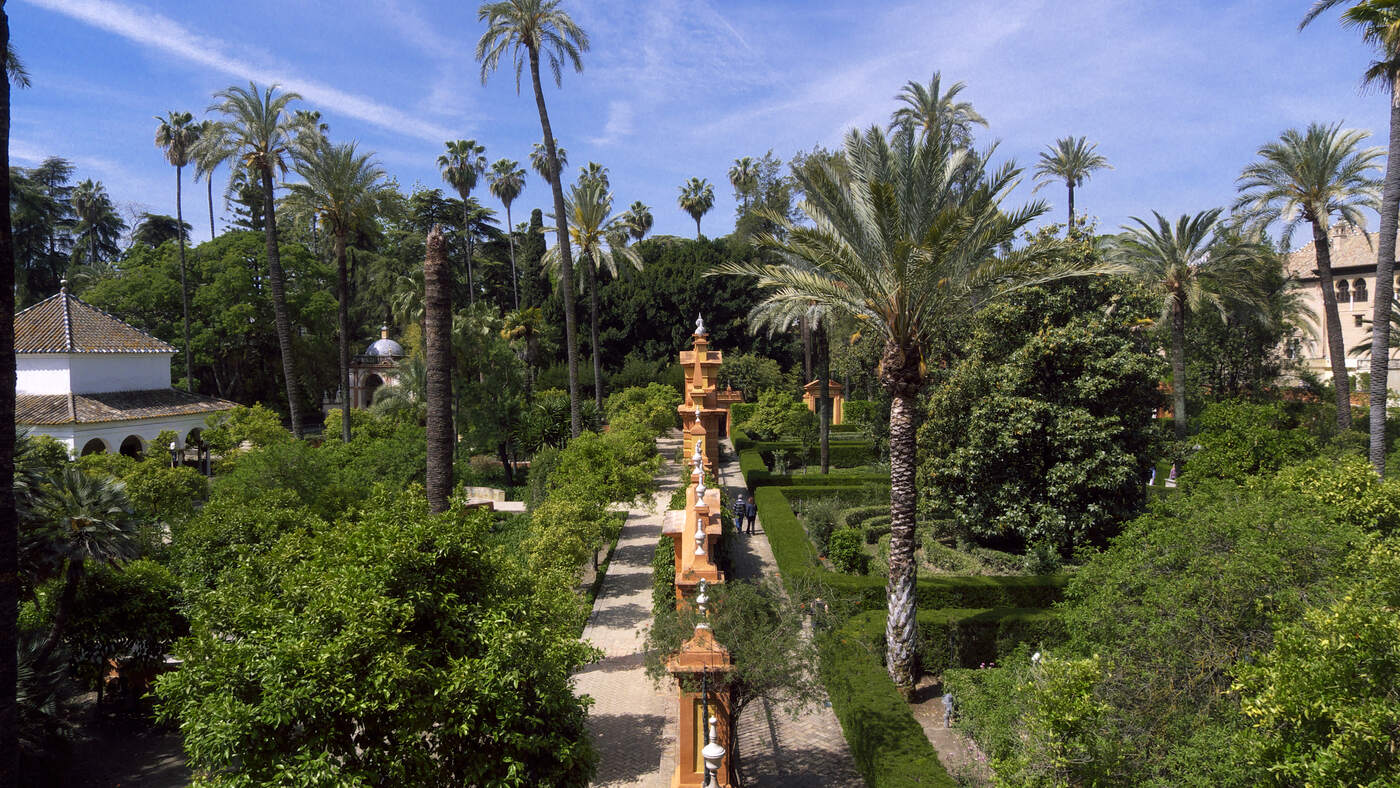 Photo: Alberto-g-rovi · CC BY 4.0 · Wikimedia Commons
Guided tour of the Real Alcázar
Guided tour to discover the blend of cultures in the Real Alcázar, one of Seville's most visited monuments. Duration: 1 h to 1 h 30.
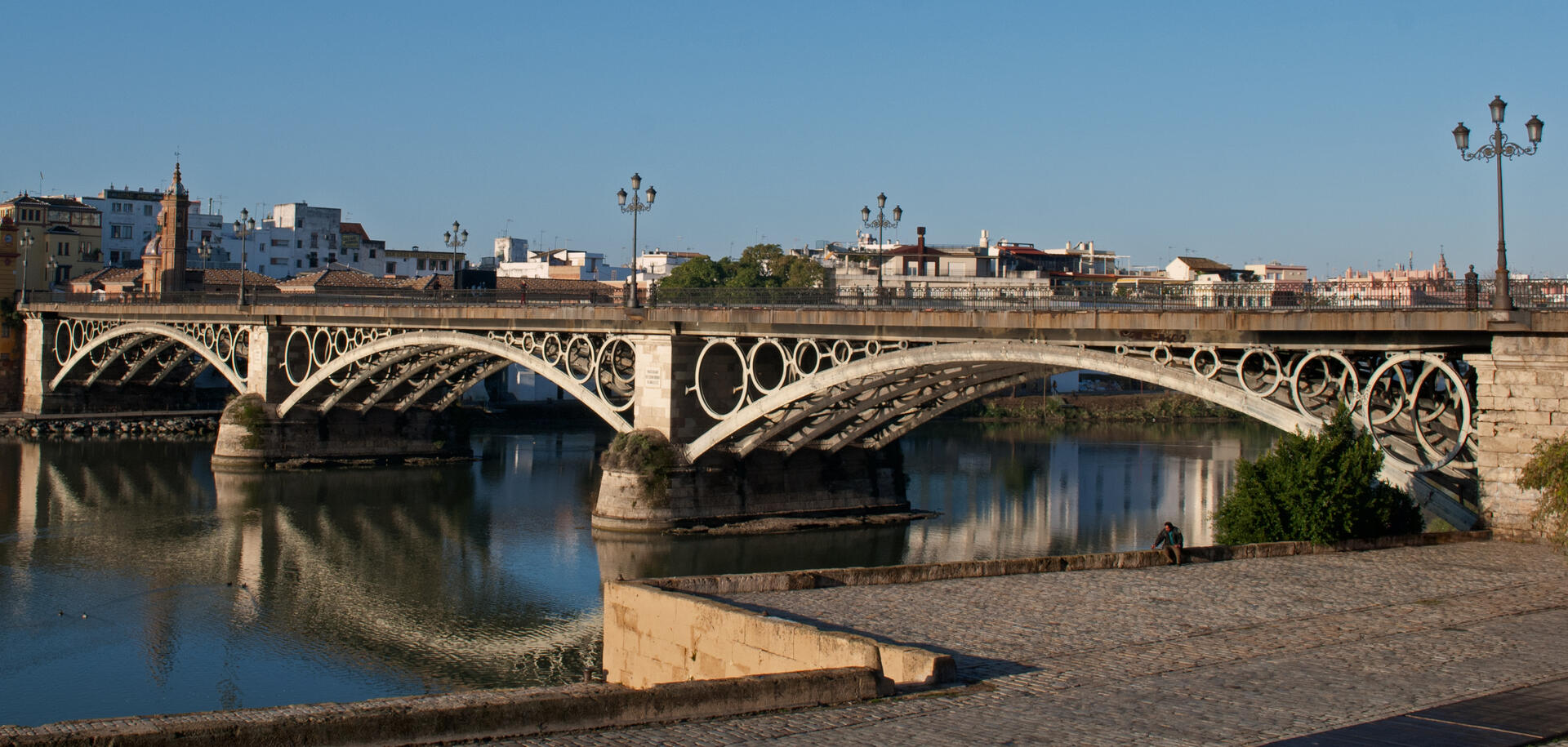 Photo: Anual · CC BY-SA 4.0 · Wikimedia Commons
Triana bar and tapas route
Guided route through the streets of Triana to taste Sevillian cuisine in miniature, bar by bar. Duration: 2 h 30.
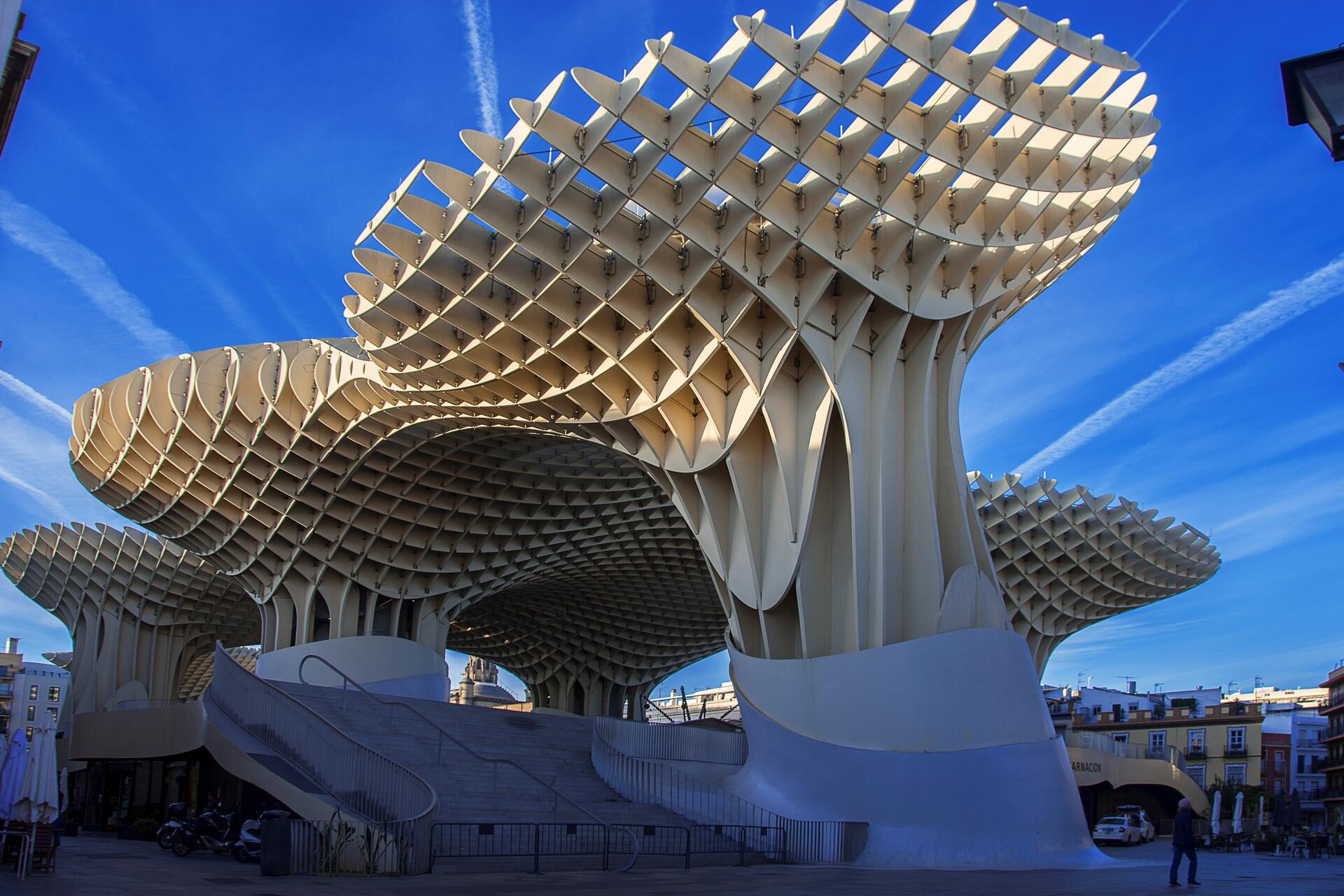 Photo: Anual · CC BY-SA 4.0 · Wikimedia Commons
Guadalquivir river cruise
Cruise on the Guadalquivir from the Torre del Oro pier, taking in landmarks such as the Torre del Oro itself and the Triana Bridge. Duration: 1 h.
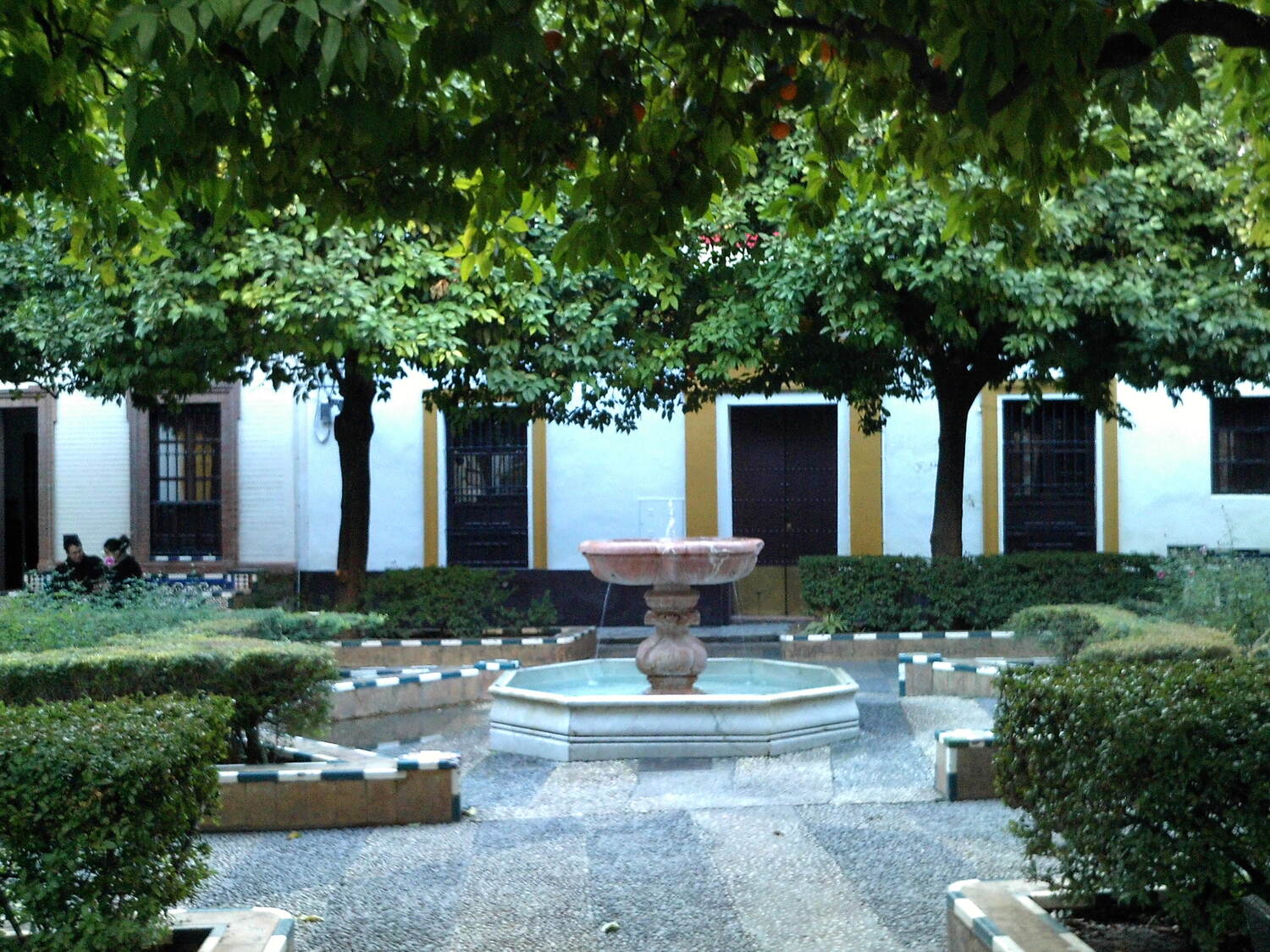 Photo: CarlosVdeHabsburgo · CC BY-SA 4.0 · Wikimedia Commons
Mysteries and legends of Seville
Free tour of the old town uncovering ghost stories, epic betrayals and love affairs from historic Seville. Starts at the monument to Juan Martínez Montañés (Plaza del Salvador). Duration: 1 h 45.
We partner with Civitatis to offer verified experiences. If you book through our links, Valmor receives a small commission at no extra cost to you, which helps us keep this content free.
👨👩👧For families
Seville is very rewarding with children: a flat, pedestrian centre, parks with boats and doves, a theme park, an aquarium, boat and horse-carriage rides, and monuments that look like fairy-tale castles. Always shade and water in summer.
🎢The star attraction
Isla Mágica
Theme park on the Isla de la Cartuja, set in the Seville of the Age of Discovery: rides, shows and the Agua Mágica water park. Open seasonally: check the calendar on its website. Online tickets from €28.90 (over 130 cm) and €21.90 (children 90-130 cm). A full-day plan for families.
Seville Aquarium (Acuario de Sevilla)
On the Muelle de las Delicias, by the Guadalquivir. Sharks, rays, tropical species and a large oceanarium, laid out along Magellan's voyage. At the ticket office: adults €18, children 4-14 €13, under-4s free; online family pack (2 adults + 2 children) €49. Ideal half-day plan, perfect for hot or rainy days.
⛵River and outdoors
Guadalquivir river cruise
A 1-hour boat trip on the river from the Torre del Oro pier, with views of Triana, the Maestranza and the Torre Sevilla. From €17 on Civitatis. Relaxed and very visual, it suits all ages and rests tired legs.
Rowing boats at the Plaza de España
Rowing on the Plaza de España canal under the tiled bridges is a classic that children love. Combine it with the Parque de María Luisa: ponds, fountains and doves.
Horse-drawn carriage ride
A horse-drawn carriage ride through the old town and the Parque de María Luisa; ask about the price and duration before getting in. A comfortable, fun way to see the essentials without tiring the little ones.
🔭Culture for kids
Setas de Sevilla (rooftop walkway)
Climbing up to the undulating walkway of the Setas, above the rooftops of the centre, is a real adventure for children, with a light show. General admission from €16, reduced from €13, free for under-6s; family packs from €27. Spectacular and quick.
Casa de la Ciencia
A CSIC museum in the Peru Pavilion (Parque de María Luisa) with a planetarium and interactive exhibitions. Entry €3, planetarium €3, combined €5; closed on non-holiday Mondays. Indoors: a great plan B with children and very educational.
💡 Tips for parents: the centre is flat and pedestrian (pram-friendly) · In summer, visits early and indoors at midday (Aquarium, Casa de la Ciencia) · The Parque de María Luisa is perfect to run around and picnic · Ice-cream and horchata shops all over the centre · The Real Alcázar peacocks and the Plaza de España doves are a guaranteed hit · At Holy Week, kids collect balls of wax from the nazarenos.
🌧️Plan B (rainy days)
Seville enjoys plenty of sun, but if it rains or the heat is fierce there are first-rate museums and palaces, covered markets and bars, Arab baths, theatre and cinema, shopping centres and indoor plans for children so the day isn't lost.
🏛️Essential museums
- Museo de Bellas Artes — the second art gallery in Spain after the Prado: Murillo, Zurbarán, Valdés Leal, El Greco, in a former convent. €1.50 (free for EU citizens). Closed Mondays.
- Archivo de Indias — documents of the colonisation of America in a building by Juan de Herrera. World Heritage Site and free entry. Closed Mondays.
- Museo del Baile Flamenco — Cristina Hoyos's interactive museum in Santa Cruz, with a tablao show in the late afternoon-evening. An indoor cultural plan.
- Centro Cerámica Triana — the history of Seville tiles over old kilns, next to the Mercado de Triana. Small and original; free with a Real Alcázar general ticket.
⛪Palaces and heritage indoors
- Casa de Pilatos and Palacio de las Dueñas — two spectacular palaces to explore interiors, courtyards and art collections whatever the weather.
- Palacio de Lebrija — a palace-house with original Roman mosaic floors brought from Itálica. Guided tour of the upper floor.
- Antiquarium — Roman and Almohad remains beneath the Setas, fully indoors. Combine it with the viewpoint.
🛍️Shopping malls
- Nervión Plaza — shops, restaurants and cinemas in the Nervión district, next to Santa Justa.
- Lagoh / El Corte Inglés — the large Lagoh leisure centre (Sevilla Este) and the El Corte Inglés at Plaza del Duque and Nervión in the heart of the city.
🍷Covered markets and bars
- Mercado de Triana — Triana's covered food market, with fishmongers, ham stalls, tapas bars and even a small theatre. Perfect for a rainy day.
- Historic bars in the centre — an indoor tapas route through El Rinconcillo (since 1670), Las Teresas in Santa Cruz and the bars of the Alfalfa and El Arenal.
🧖Arab baths
- AIRE Ancient Baths Sevilla — Andalusí-inspired baths in a palace-house on Calle Aire (Santa Cruz): pools at different temperatures, steam bath and massages. Booking required; adults only.
🎭Theatre and cinema
- Teatro de la Maestranza — Seville's great opera house, by the river: opera, dance and concerts during the season (programme and tickets on its website).
- Nervión Plaza cinemas — multiplex inside the Nervión Plaza shopping centre, next to Santa Justa: listings on the centre's website.
🐠With children, indoors
- Acuario de Sevilla — sharks, rays and a large oceanarium on the Muelle de las Delicias; half a day indoors (adults €18, children 4-14 €13 at the ticket office).
- Casa de la Ciencia — a CSIC museum with a planetarium and interactive exhibitions in the Parque de María Luisa (entry €3; combined with the planetarium €5; closed on non-holiday Mondays).
📅When to visit
Best time: spring (March-May) and autumn (October-November). Seville in spring smells of orange blossom and lives its two great festivals. Winter is very mild (avg. ~11 °C, bright days), ideal for visiting monuments without queues or heat.
The ideal months are March, April, May, October and November: pleasant temperatures for wandering and for the Plaza de España at sunset. In spring Holy Week and the Feria coincide: an unrepeatable atmosphere, but a packed city with high prices: book well in advance.
✝️ Holy Week 2027 (21 – 28 March) — From Palm Sunday to Easter Sunday; "La Madrugá" (the night from Maundy Thursday to Good Friday) is the big night. Festival of International Tourist Interest. 🎪 Feria de Abril 2027 (lights-on on Monday 12; fair from Tuesday 13 to Sunday 18 April) — the Los Remedios fairground with over 1,000 casetas, flamenco dresses, rebujito and horses. 💃 Flamenco Biennial — the world's biggest flamenco festival, held in even years (next edition: 2028). 🌸 Crosses of May (early May) and Corpus Christi (27 May 2027) with the Arfe Monstrance. 🎉 Velá de Santa Ana (Triana, around 26 July): a riverside fair.
Avoid July and August: Seville is one of the hottest cities in Europe (in July, average highs of 36 °C and lows of about 20 °C, according to AEMET climate normals). If you come in summer, visit monuments first thing, siesta or a museum at midday, and life at sunset. Always carry water and seek the shade.
💸Budget plan vs Premium plan
💰 Budget plan
Lots of free sights and tapas
- Cathedral and Giralda — €13 online (on Sundays, free access from the ticket office from 5pm, subject to the liturgical calendar)
- Barrio de Santa Cruz + Plaza del Triunfo + Archivo de Indias — free
- Plaza de España + Parque de María Luisa — free
- Tapas route: El Rinconcillo, Las Columnas and the bars of Santa Cruz
- Set lunch menu or tapas at the Mercado de Triana
- Torre del Oro (free entry, voluntary donation) + a stroll along the Guadalquivir
- Triana and sunset from Calle Betis — free
- More tapas in the Alameda de Hércules or the Feria quarter
✨ Premium plan
Guided visits and fine dining
- Guided visit to the Real Alcázar — from €34 on Civitatis; add the Cuarto Real Alto (€5.50 with audio guide)
- Guided visit to the Cathedral rooftops — €20 online
- Guided trip to Itálica or Córdoba
- Cañabota ⭐ — Michelin star, outstanding fish and seafood
- Abantal ⭐ — Michelin star, creative cuisine with tasting menus
- Flamenco tablao with dinner (El Arenal or Casa de la Memoria)
- Rooftop cocktails with views of the Giralda — central hotels
Valmor stays in the area
Apartments and houses we manage in this area.
Planning to stay in Seville?
Discover our properties in Seville with professional 24/7 management. Cleaning, check-in, multilingual support and everything you need for a perfect stay in the capital of Andalusia.
Contact us